EXPEDITION GUIDE ACADEMY


Polar Bear Safety & Firearm Handling
About the Course
Working safely in the High Arctic, whether in Svalbard, Greenland, or the Canadian Arctic, requires far more than being able to handle a rifle. It’s about understanding bear behaviour, managing people, and making the right decisions long before an encounter occurs.
Since delivering our first Polar Bear Safety & Firearm Handling (PBS) course in October 2021, we’ve continuously refined and improved the programme based on real feedback from students, operators, and industry requirements.
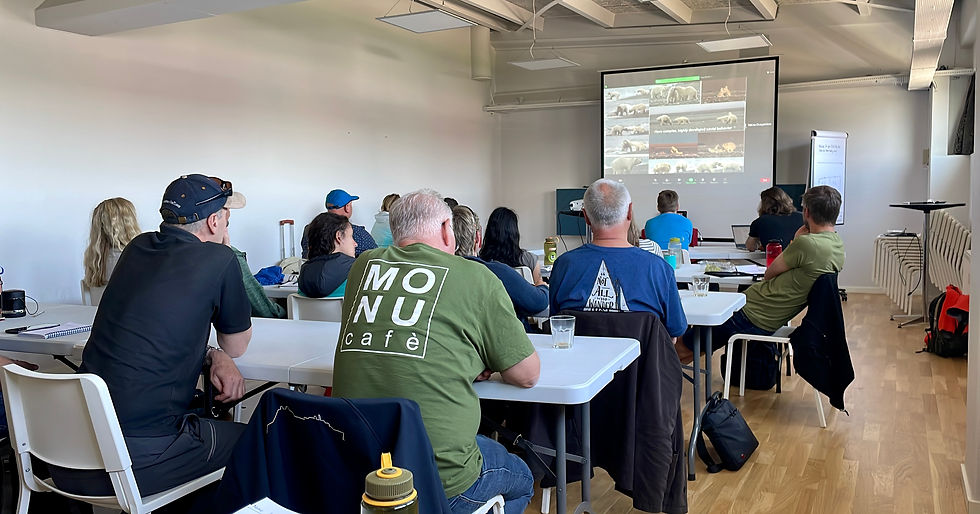
The PBS takes a systems-based approach to operating safely and confidently in polar bear environments. Through classroom learning, practical rifle training, and realistic operational scenarios, participants develop the competence and confidence needed to prevent, de-escalate, and respond effectively to potential bear encounters.
The course is delivered by a small, experienced instructional team with deep field expertise. Our EGA instructor works alongside participants throughout the programme, bringing extensive expedition experience and helping to integrate behavioural understanding, firearms skills, and operational context into one coherent system.
Dr. Nikita Ovsyanikov leads the Non-Lethal Polar Bear Technology session, sharing key behavioural principles and the field-tested methodology he has used during decades of working unarmed in bear terrain.
Firearms training is delivered by two specialist range instructors who are also qualified gunsmiths, offering calm, practical, and ego-free instruction.
This training is designed not only for guides and expedition staff, but also for scientists, field teams, and ski or sail expeditions operating in polar bear territory. The course blends non-lethal polar bear safety instruction, live-fire firearm training, and operational planning for land-based excursions, giving participants a complete framework for safe and responsible field operations in the Arctic.
What You’ll Gain
-
A clear, structured approach to planning and working safely in polar bear terrain.
-
The ability to make informed decisions under real-world expedition conditions
-
Practical skills and confidence in non-lethal polar bear safety methods
-
Competence in firearm handling within a last-resort defensive context
-
A solid understanding of team coordination, field protocols and safety systems
-
Certification enabling you to apply to loan and handle firearms in Svalbard
PBS Course Outline
Course Elements
-
Non-Lethal Polar Bear Safety
-
Firearm Handling & Safety
-
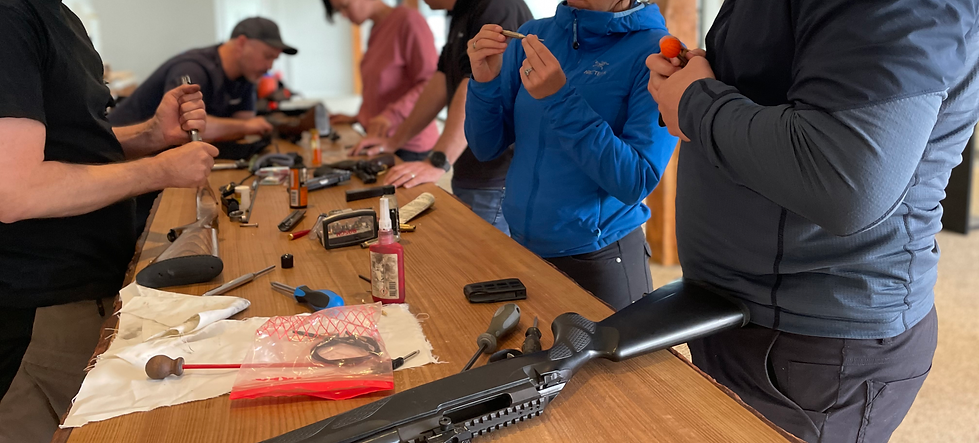
Firearm Maintenance & Troubleshooting
-
Polar Bear Scouting Theory & Operation Logistics
-
Pre-Course Learning Component
Location: Denmark
Language: English Proficient
Age: 18+
Previous experience: None required
Who is the course for?
Those new to the industry and seasoned guides. The course is designed for anyone looking to become more proficient and confident in operating in polar bear terrain and with firearm handling.
Ratio Practical Firearm Training: Max. 1:6
Ratio Operational Theory: Max. 1:12
Ratio Non-lethal Theory: Max. 1:12
Duration: 3 days
Maximum: 12
Minimum: 12
Price: USD $ 1950

Non-Lethal Polar Bear Safety
Dr Nikita Ovsyanikov, one of the world’s leading polar bear behaviour specialists, brings more than 40 years of research and over 2,000 direct field encounters to this session. He presents the principles and field-tested methodology behind his non-lethal approach to working safely in bear terrain, including how behaviour, posture and decision-making influence outcomes in close encounters. His perspective is grounded in decades of unarmed fieldwork and provides a valuable foundation for understanding how to prevent and de-escalate risk.
The session is framed for modern expedition operations, where guiding teams must account for guest behaviour and operational realities. We focus on the components of Nikita’s methodology that translate effectively to expedition guiding and integrate them into contemporary best practice and avoidance-based safety systems.
Our instructors expand on this session with guided discussion and practical applications, ensuring participants understand how to apply these core principles in the real-world context of expedition operations.
Key topics:
-
Preventing terrestrial polar bear encounters
-
Recognising behavioural cues and early warning signs
-
De-escalation and conflict-avoidance strategies
-
Decision-making under pressure
-
Briefing and managing guests in polar bear habitats
Firearm Handling & Safety (Live Fire Range)
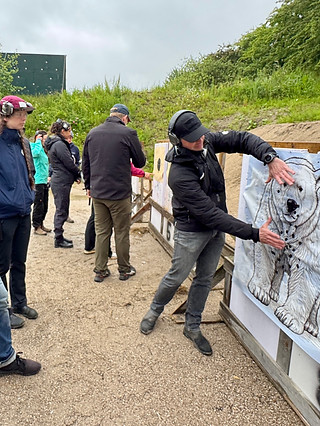
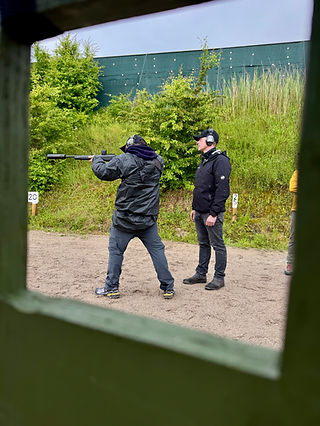
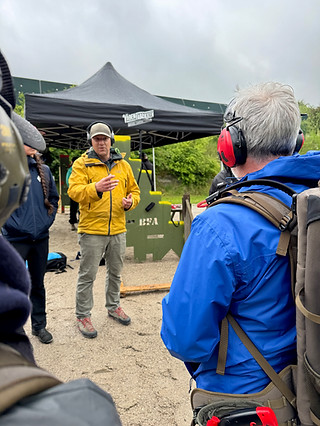
This segment provides practical, outdoor firearms training at a dedicated range. Participants train in realistic conditions, outdoors, in the elements, and using the gear you would carry in the field.
The focus is on developing competence, confidence, and professionalism with rifles under real-world conditions.
Key topics:
-
Safe handling and best practice with expedition rifles
-
Shooting fundamentals, stable positions and practical stances
-
Aiming, sight picture and consistent rifle control
-
Engaging static and moving targets in realistic outdoor conditions
-
Repetition under guidance to reinforce skills and maintain situational awareness
-
Range protocols, transport requirements and operational readiness in the field
Firearm Maintenance & Troubleshooting
This module is designed to demystify expedition rifles and build practical confidence through clear, hands-on learning. Participants develop a solid understanding of how their equipment functions, how to look after it in Arctic conditions and how to make informed decisions when something doesn’t feel quite right. The focus is on knowledge, competence and having a simple framework to guide maintenance and troubleshooting in the field.
Key topics:
-
Understanding rifle components and basic functions
-
Field care and routine maintenance in cold and coastal environments
-
Preventing moisture, corrosion and ice-related issues
-
Practical checks to support reliability during expedition operations
-
Clearing common malfunctions safely
-
Storage, transport and readiness considerations for Arctic conditions
Polar Bear Scouting Theory & Operational Logistics
This full-day module connects Nikita’s behavioural insights with the practical realities of expedition work. We build a clear, repeatable framework for scouting, terrain assessment and maintaining a broad situational picture throughout a season.
Participants explore how individual judgment and group dynamics shape decision-making in polar bear terrain, and how to structure daily routines and briefings that keep teams aligned. The focus is on practical, non-lethal systems that guides can apply immediately in their preseason preparation and onboard operations.
Key topics:
-
Planning and logistics for land-based operations
-
Effective scouting and observation methods
-
Integrating firearm and non-lethal safety systems
-
Team coordination and communication under stress
Pre-Course Learning Component
A preparatory online module ensures all participants share a common foundation and language before arrival. Expect to receive this material a month out from the course start. The Pre-Course Learning component covers firearm terminology, safety principles, and key concepts, allowing in-person training to focus on applied learning.
Completion of this module is required before the course start date. The EGA can not issue your training certificate without completion.
Key points:
-
Establishes a shared baseline of terminology, concepts and safety principles
-
Ensures participants arrive prepared and ready for applied learning
-
Supports consistent understanding across different backgrounds and experience levels
-
Maximises in-person training time by covering foundational material in advance
Practical Course Information
Once you have booked
Once you have booked your place on the Polar Bear Safety & Firearm Handling course, you will receive a confirmation email, followed by a Practical Information email, with specific pre-course information. This will include location details, how to get there, the course outline, and timings. Included are also accommodation suggestions. Please note that this information is provided after booking.
Arrival and Departure Recommendations
For optimal course experience, we advise arriving the evening before the course starts and planning departures for the morning after it concludes. More information on this is provided in the Practical Information email mentioned above.
Accommodation and Meals
Participants are responsible for their accommodation arrangements. The exact location and accommodation suggestions will be sent to you as part of the Practical Information email you receive once you have booked the course. The course is busy, and we have short lunch breaks as a result. Thus, we advise participants to bring their own lunch for each day during the course. Students will have coffee, tea, multiple milk options and sugar available throughout their time with us.
Certification
Successful completion of the course leads to two different certificates.
-
EGA's Training Certificate, which is instrumental for participants aiming to guide in Svalbard. This certificate can be used to apply for a loan permit with Sysselmesteren in Svalbard. Please keep in mind that there must be a time-limited lender declaration between the borrower and the lender for the loan permit to be valid. This is something you will have to contact your employer to confirm.
If you are a member of the PTGA, please note that this certificate can be sent to the PTGA and filed as part of your profile.
-
Non-lethal Firearm certificate from Dr Nikita Ovsyanikov
Safety & Responsibility
-
The safety of all participants is paramount. Our EGA instructors and/or our firearm instructors at the shooting range have the authority to modify or halt training if safety standards are not met. As a result, the EGA will be unable to issue a training certificate.
-
A waiver acknowledging the risks and personal responsibility is required from each participant before entering the shooting range.